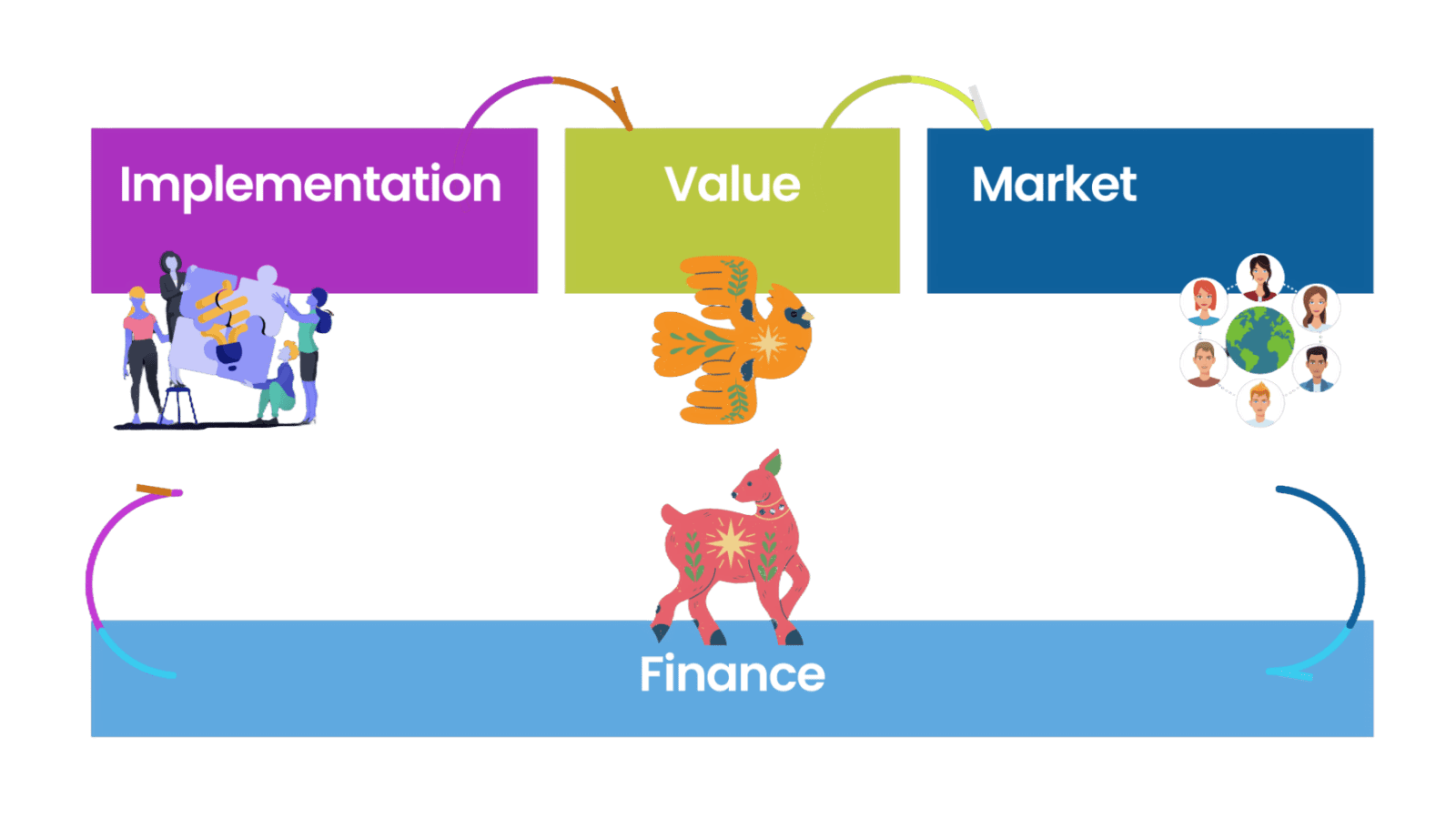
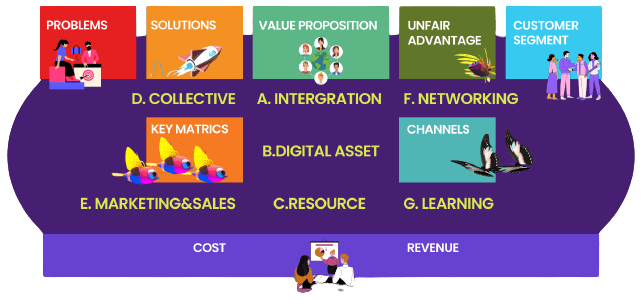
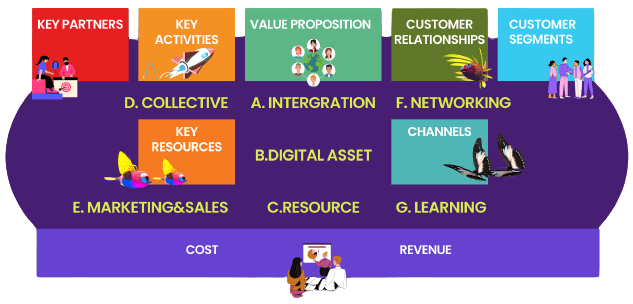
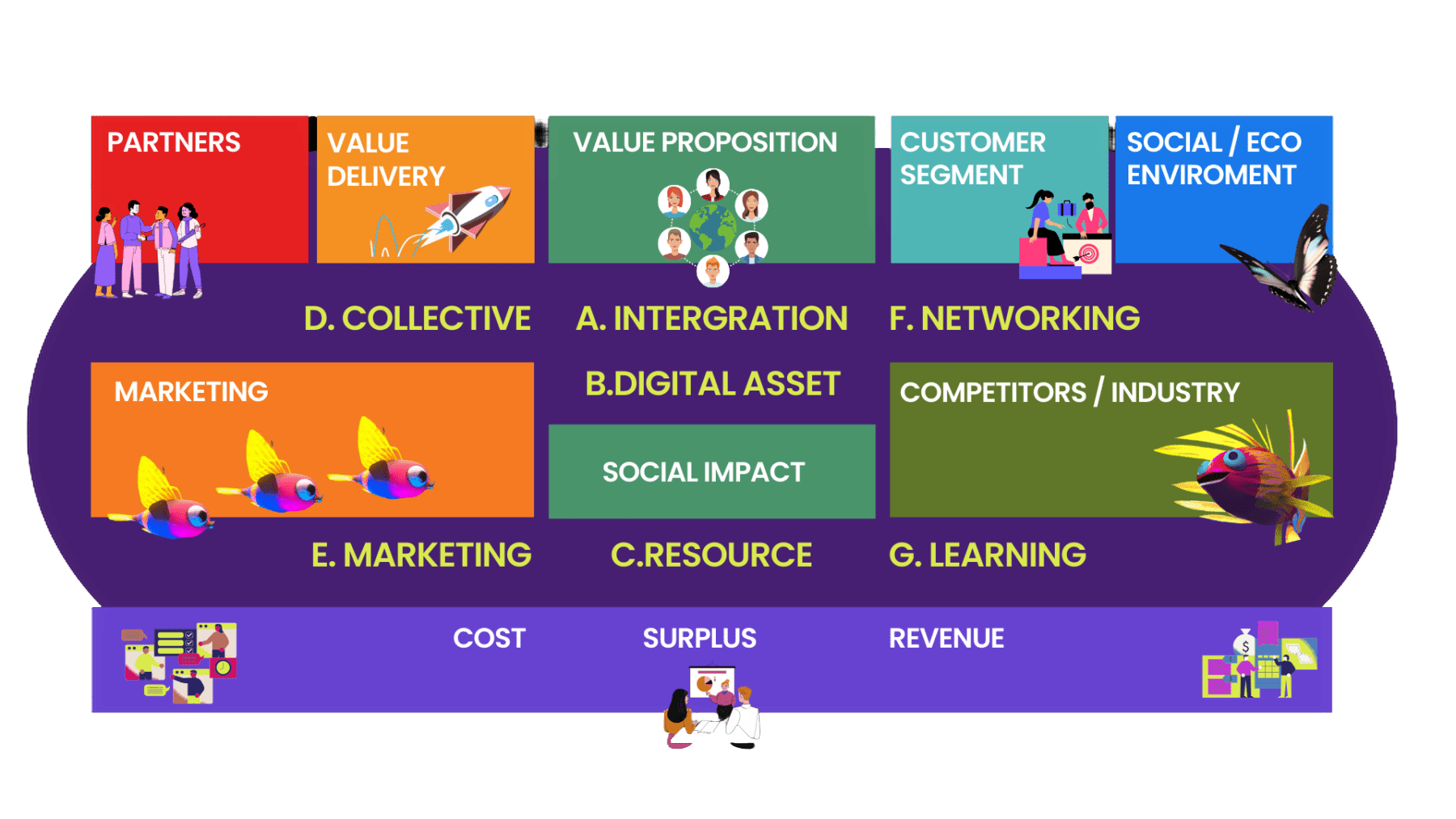
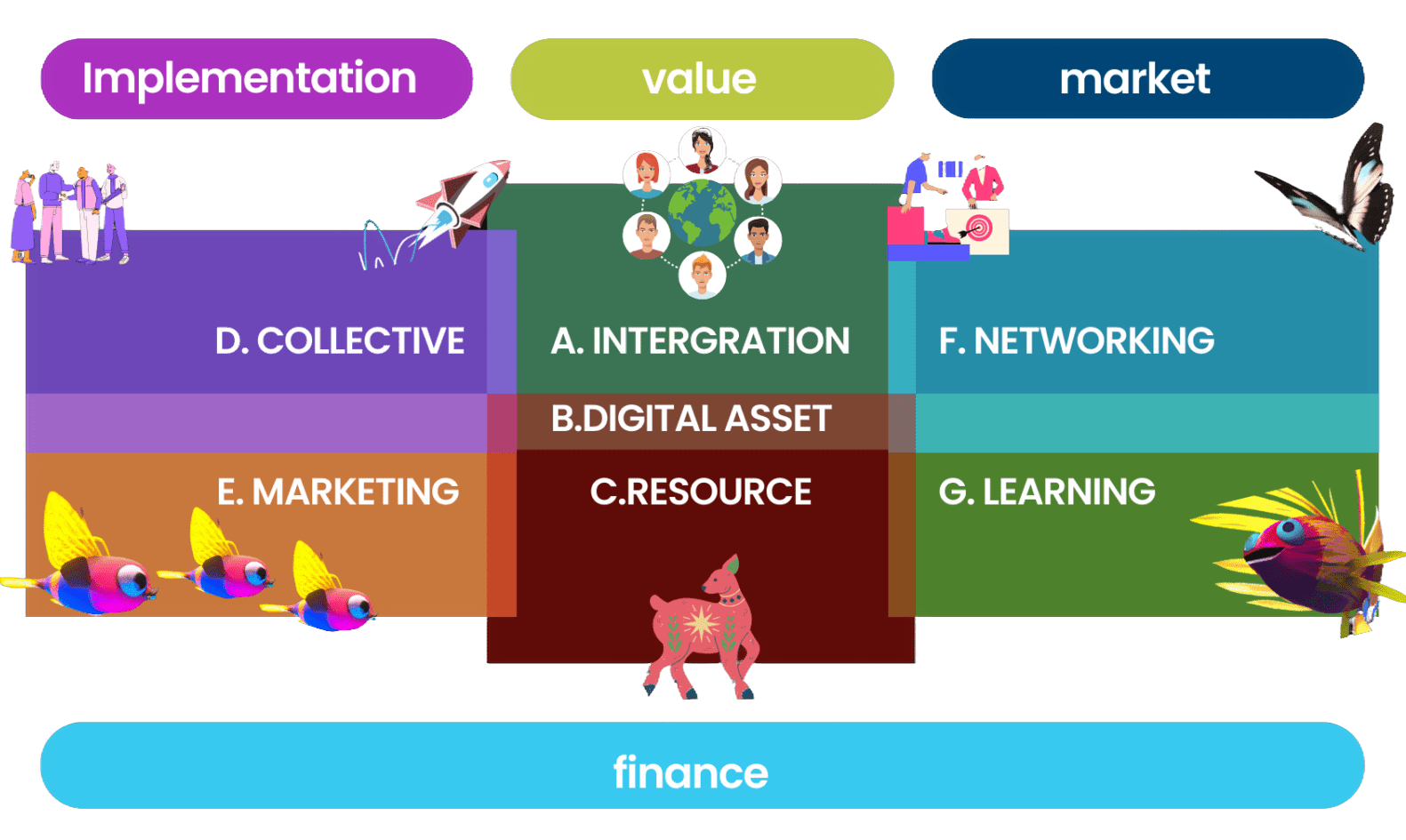
The DSE Canvas is a framework designed to align with the four components found in all business models. It is recommended for startups and small to medium-sized businesses to systematically incorporate a variety of tools into an integrated platform, providing adaptable and scalable functionality. This approach enables you to incrementally develop your platform at a reasonable cost.
Startups and small to medium-sized businesses may discover that customizing a platform with an IT company can be costly, involving both initial production expenses and ongoing monthly maintenance costs. Over time, the platform may also require regular updates, influenced by operational insights, digital skill development, and changing market needs.
Furthermore, the primary challenge lies in integrating information systems with startup workflows. This integration needs to be gradual and interactive, aligning with the ‘build-measure-learn’ approach of Lean Startup. It necessitates flexible information systems in terms of functionality, scalability, and operation, rather than rigid, one-size-fits-all structures. Consequently, organizations must undergo a recognized process known as ‘digital transformation’ to align with information system frameworks.
We’ve designed the DSE framework as an open structure comprising numerous modular components, all harmoniously integrated into a versatile and reversible process. You have the autonomy to embrace the tenets of DSE, selecting these modules at your own pace while overseeing your team’s advancement in mastering and implementing these digital tools.
Enterprises utilize the Lean Startup methodology to swiftly develop products or services, gaining a competitive edge. However, when entrepreneurs embark on launching a new or small-to-medium-sized business, they must establish various crucial operational components for their project or venture.
These components encompass establishing connections with key partners, key resources, and key activities to set up a value production infrastructure, as well as structuring customer relations and value delivery channels. Additionally, they need to implement management systems for tasks such as customer surveys, engagement, participation, and communication.
Moreover, it’s important to recognize that the social value conveyed through these channels significantly influences the quality and direction of your customer relationships and marketing-driven sales. Being attuned to the social essence of your business enables you to unearth deeper contexts for the value of your product or service, ultimately facilitating the creation of a competitive advantage within your industry environment.
DSE (Digital Social Entrepreneurship) empowers your business by revealing your startup’s social capital and constructing an integrated digital workspace for your business operations right from the outset. It provides an adaptable, flexible framework for your startup to enhance its innovation capabilities.
We have explored the process of reinventing a business model at each stage using the DSE framework.
In the upcoming lessons, you will create your own DSE Framework by completing the form based on your current knowledge.
Sean Note:
1.provide a video lesson
2.in this Course We aim to gaim the knowledge of mapping DSE into your business Model(BM-SEBM)
3.Using Free tools on the market
to illustrate the principle of each block of DSE
in this lesson, we are learning a flexible DSE which adapting each phrase of business development
本網站中使用 cookie,欲查詢有關本網站使用 cookie 方式之詳情,及若您不希望在電腦上使用 cookie 時應如何變更電腦的 cookie 設定,請參閱本網站隱私權及網站使用條款之 Cookie 聲明。您繼續使用本網站即表示您同意按本網站使用條款處理您的資料。
Manage your cookie preferences below:
Essential cookies enable basic functions and are necessary for the proper function of the website.
These cookies are needed for adding comments on this website.
Google reCAPTCHA helps protect websites from spam and abuse by verifying user interactions through challenges.
These cookies are used for managing login functionality on this website.